JellyTech Perspective -> Java trick(s) 🤓
NullPointerException… the nightmare of every Java developer. To the rescue comes a solution known since Java 8 — the Optional class. But what is the best way to use this class?
Let's look at the following code snippet:

The UserRepository interface describes a method called "findByName", which should return Optional<User>. Is this really a good practice? 🤔 Classes implementing the above interface will expose a rather inconvenient method whose result may not contain a value, so it will need to be checked to avoid a NullPointerException. Example code might look like this:
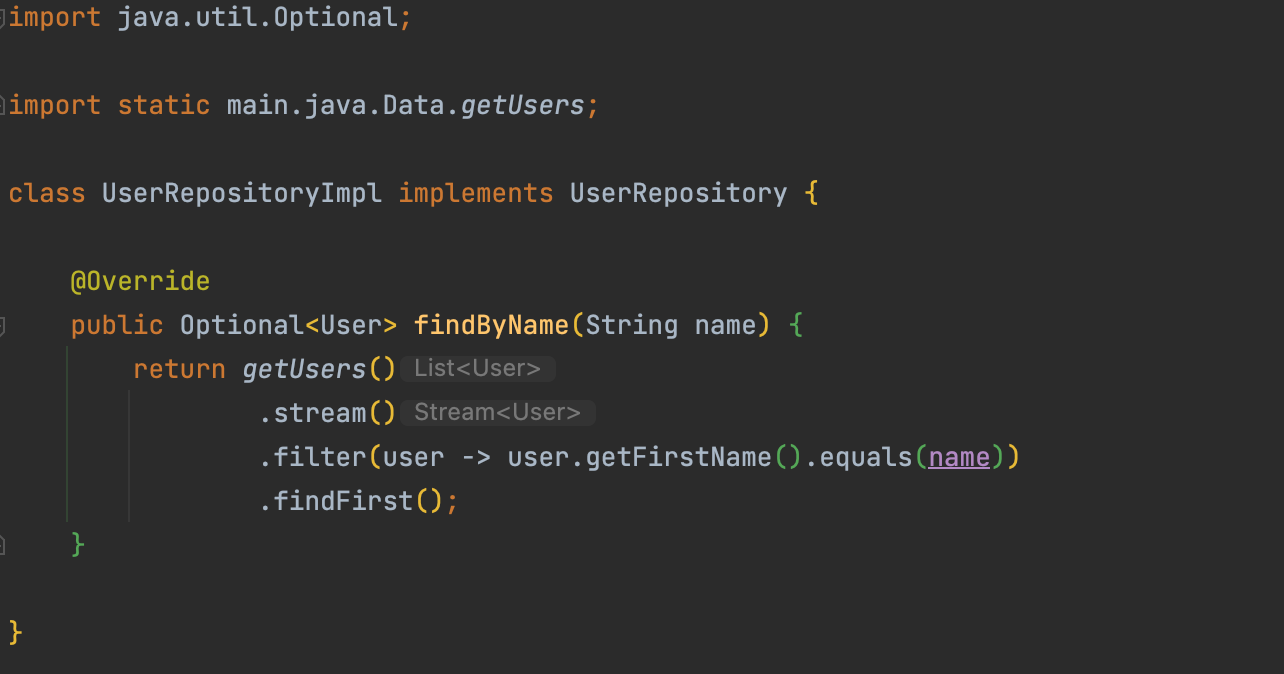
whether the Optional wrapper contains the requested object, and in case it's missing — for example, throw an exception.
But perhaps it's worth considering a different solution 🤔:
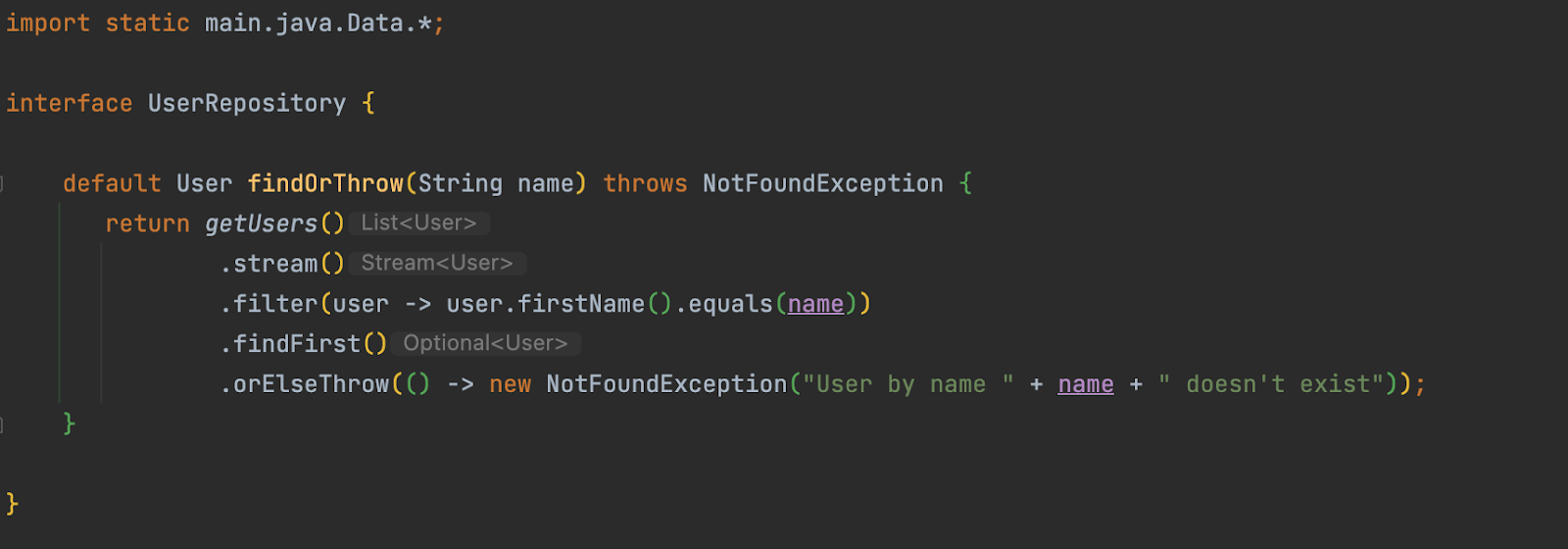
And this is exactly where we arrive at the question: if we always want to throw a standard exception when an object is not found — an exception we should, of course, catch (a separate topic 😊) — then perhaps this is the better solution?
The default method will aim to validate as quickly as possible, and in case the object is not found, it will throw an exception — which is explicitly declared in the method's signature.
Thanks to this change, calling the "findOrThrow" method will be a single line, and when writing business logic we get a very readable code. Clean Code Rules!!! 😊😊😊
The example presented here is an invitation to think more deeply about the topics of readability, simplicity, and continuous improvement of your own code.