Big Data and Machine Learning — Applications in Medicine
Surgeries performed with the support of holographic images of a patient's internal organs, models calculating the risk of cancer or diabetes, a model that evaluates skin lesions and estimates whether they are already pathological changes. This is not science fiction — this is the present. It seems that medicine and technology have always gone hand in hand. Now this duo has accelerated particularly strongly. Why?
The Present.
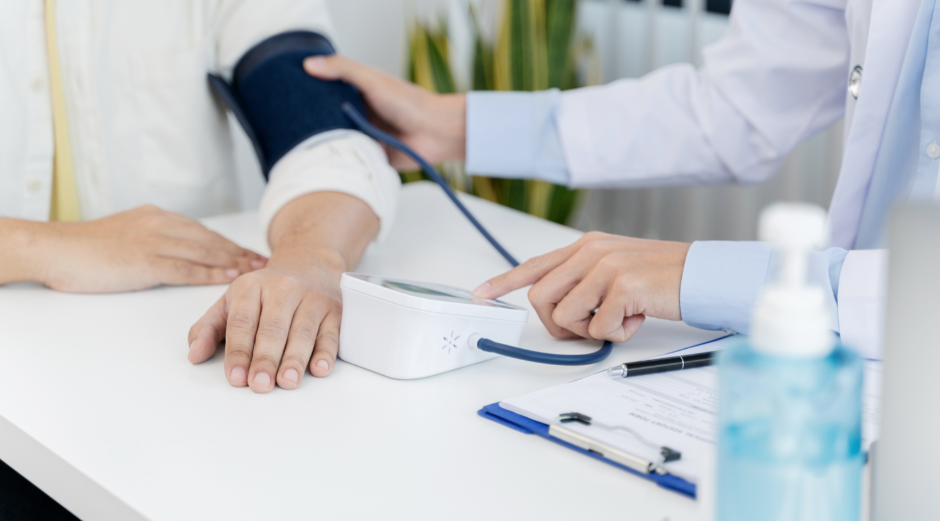
Who hasn't been to a doctor at least once? We know perfectly well that even the simplest cold requires the doctor to take a medical history and possibly write a prescription. Throughout our lives, we have very many visits, both routine and emergency. We need greater or lesser surgical interventions, sometimes we struggle with chronic diseases or are genetically predisposed to certain conditions. The life of one person and their medical history is hundreds of thousands of data points accumulated over the years. These are primarily dates, patient age, administered medications, symptoms present, recovery time, X-ray images, ultrasound images, vaccination information, test results, readings from medical devices.
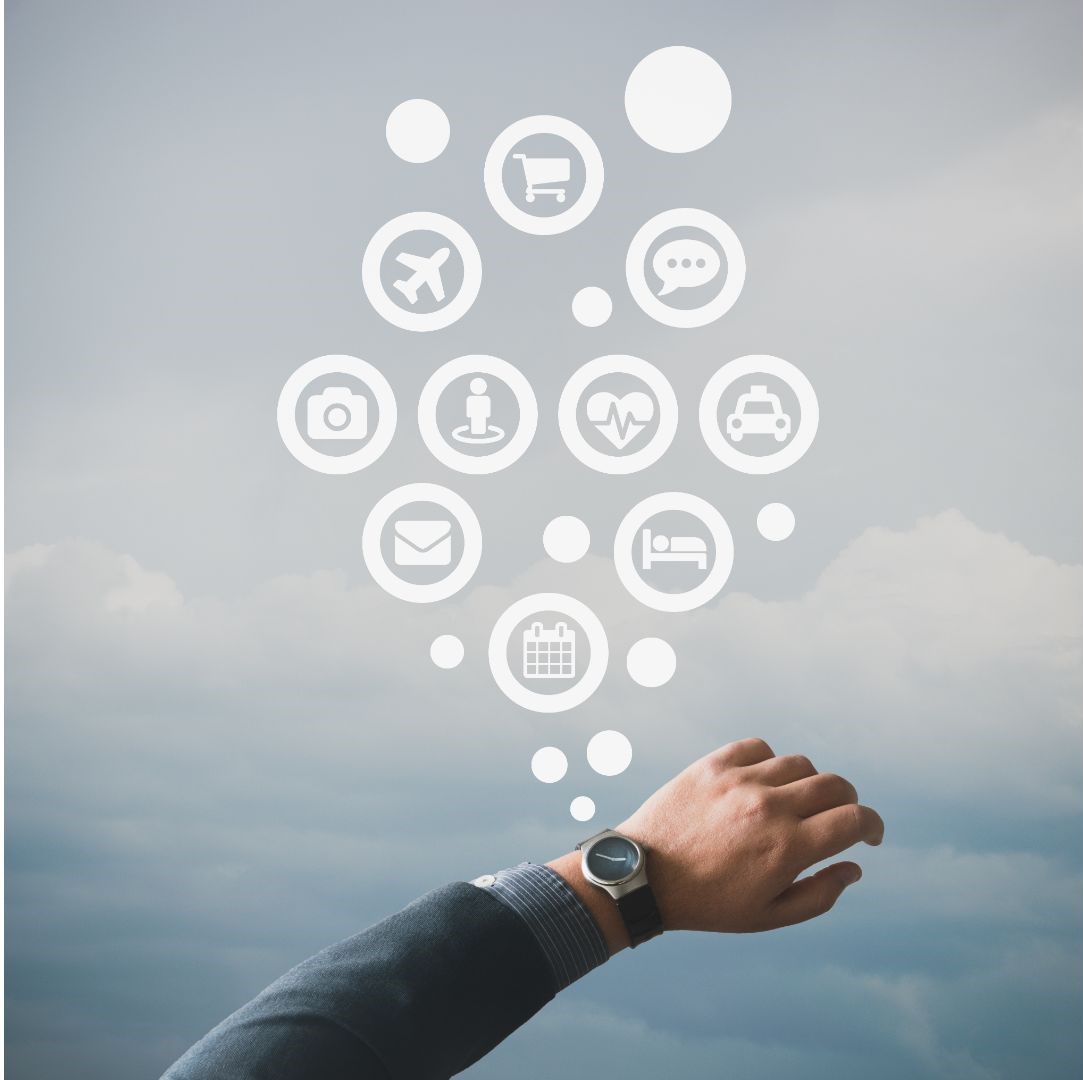
Add to this data from all private tools, such as watches, bands and others, that allow monitoring of our well-being throughout the day, without interruption. What do they monitor? For example: heart rate, blood pressure, temperature and much more. Watches from a certain well-known corporation are already rich in arrhythmia notification features. This watch periodically measures the user's pulse; if it detects arrhythmia, it notifies the user, as it may indicate, for example, atrial fibrillation. Like having 999 in your watch. Speaking of emergency numbers. An extremely important convenience is the cross-notification of users within Smart Watches or simply smartphones. Common today is the function that allows generating a warning message that a person close to you has dialed, for example, 112.
But returning to Machine Learning.
In medicine, such a mix of data, coming from various sources, is extremely valuable.
On one hand, we have data transmitted from devices that the model is able to interpret as, for example, life-threatening. They are a real early warning system for emergency cases. On the other hand, we have an ever-growing database of medical data:
- information about disease cases,
- image descriptions,
- test results,
and increasingly better and more automated analysis. All these conveniences give doctors what matters most — time for earlier diagnosis and identification.
What do we use today in medicine from the broadly understood area of Big Data and Machine Learning?
- Diagnosis and disease prediction
- Medical data management
- Real-time patient monitoring
- Data management and Big Data analytics within healthcare systems
Technology companies are competing with ideas. We ourselves propose diverse technological-scientific solutions to our clients. Let's look at a few specific cases.
DIAGNOSTICS
When it comes to diagnostics, it's worth looking at these few cases from around the world:
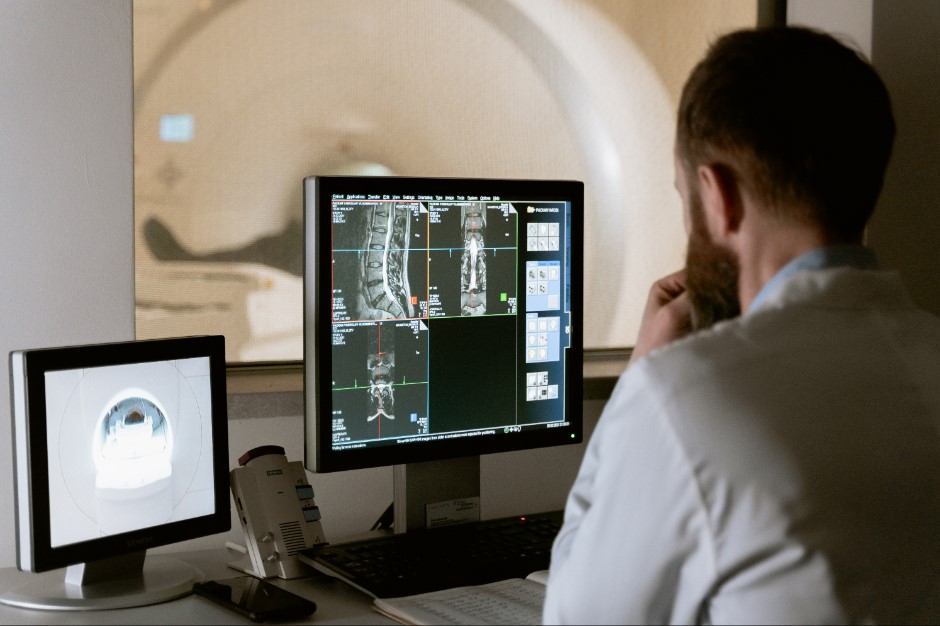
- The CheXNet, CheXNeXt, CheXpert model type — allows analysis of X-ray images. Specialists have developed a special algorithm in them that can detect pneumonia from chest X-rays at a level surpassing practicing radiologists.
− The use of convolutional neural networks (CNN) for skin lesion classification, i.e., analysis of skin changes based on hundreds of thousands of available images with pathological changes.
− Analysis of retinal fundus images in the detection of diabetic retinopathy — an extremely promising study with a high rate of detecting a patient's susceptibility to diabetes-related vision loss.
− Analysis of histopathological examinations of lymph nodes. Pathologists assisted by the algorithm showed higher accuracy than the algorithm or the pathologist alone. In particular, the algorithm's assistance significantly increased the sensitivity of micrometastasis detection (91% vs. 83%, P=0.02).
These are just a few examples, yet they show the real and measurable effects of using machine learning.
The second very important area is prognostics.
PROGNOSTICS
Here the game is of course about predicting potential "problems" as accurately as possible. Data Science specialists from our company follow global trends and strongly recommend the use of various ML and DL models within processes improving data management in hospitals, medical facilities, and other related entities. What exactly are we talking about?
For example, models predicting potential health problems of a patient based on their medical history. We're talking about estimating risks such as stroke or heart disease. This is a big deal for preventive care, which as we know is significantly underdeveloped in Poland. Take, for example, diabetes. 2.7 million Poles suffer from it, and 550,000 of them are unaware of the developing disease. Diabetes is diagnosed every 10 seconds worldwide. In Poland, we have a very high percentage of diabetes complications, including cases of limb amputation or vision loss in patients. The challenges are therefore very numerous. However, the creation of adequate models, supported by the application of additional methods such as decision trees, random forests, or ensemble models ensuring result interpretability, shows how pivotal a medical and scientific moment we are in. The direct cooperation of machine and human can realistically lead to lower mortality rates, and certainly to accelerating the analysis of health problems.
Fairly advanced models include survival models and hazard models — determining the risk of disease/death as a function of time — as well as recommendation systems supporting the doctor during patient contact, utilizing the concept of "artificial twins."
The first of these have been known since the 1950s. "Survival analysis is a branch of statistics (or biostatistics) comprising methods for studying processes whose subject is the time that will elapse before the occurrence of a certain event, e.g., patient death.
The main questions that such survival analysis would help answer are:
• What fraction of the population will survive a certain period of time?
• How long will those who survive live?
• Should more than one factor contributing to failure be taken into account?
• What specific circumstances or characteristics of the studied object affect the chances of survival?"*
The second model based on so-called artificial or digital twins is a function that allows creating a virtual model of the patient. Artificial Twins are a safe environment for testing medical indications, further treatment processes, and the effect of medications. They allow problems to be detected while leaving enough time to make necessary corrections in diagnosis or pharmacology, or to apply appropriate procedures.
What challenges lie ahead of us then.
Extremely important is of course the preparation of a representative dataset, incorporating medically relevant test results and demographic data. The learning process must be built to minimize/maximize an appropriately chosen coefficient evaluating the model's performance (while also allowing comparison with other methods / studies). This also applies to the interpretation of the model itself — i.e., which explanatory variable (e.g., age or blood pressure) was significant and to what degree.
Most importantly and worth emphasizing: wherever there is any doubt — the deciding voice should/will belong to the doctor.
SUMMARY
All of this really sounds like actions with great potential. Are there any concerns? Yes. As always when implementing new methods of operation. Worth mentioning at least:
- Lack of adequate legislation — AI development is outpacing legislation, including matters of intellectual property and legal liability.
- How to manage the privacy and security of patient data (GDPR).
- Ethical concerns are also emerging from both doctors and patients.
On the positive side, of course, we should highlight:
- Relief for the doctor,
- Automation and standardization of processes,
- Minimization of errors.
It is worth keeping this balance of gains and losses in mind. There is really no turning back from this technological path. We only need, as companies offering technologies, ML and DL models, IT solutions, to rise to the heights of transparency and close cooperation with patients and doctors. We should also, especially for patients and doctors, help them become comfortable with the technology itself. Because right now there is a lot of misinformation and harmful content circulating, for example about Artificial Intelligence.
So what will the future of medicine look like? Let us hope that the achievements of technology will help extend the average length, but also the quality of human life on earth. Maybe soon there will be more and more blue zones on our globe 😉 let's hope it works out ☺️
We encourage you to follow our blog and case study section, where we present and describe other examples related to the use of Machine Learning in our company.
Links below:
https://www.jellytech.com.pl/post/uczenie-maszynowe-statki-i-porty?lang=PL
https://www.jellytech.com.pl/case-study/aplikacja-do-zarzadzania-transportem-morskim?lang=PL
*per Agnieszka Deszyńska (Kraków) Cox Proportional Hazards Model. APPLIED MATHEMATICS VOL 13/54 2011